Marketing works best when it is connected to what the organization is actually trying to accomplish.
I approach growth by looking across the whole system: audience, brand, communications, partnerships, funding, programs and operations. Sometimes the opportunity is a better campaign. Sometimes it is a new partnership, a stronger funding model or an entirely different way of delivering the work.
The goal is not simply more attention. It is sustainable growth that advances the mission.
Building a Sustainable, Scalable Statewide League
Texas Interscholastic Mountain Bike League | Associate League Director
When I joined Texas NICA, the organization had outgrown its grassroots operating model. Participation and community support were strong, but the league only generated enough revenue to support two part-time leadership positions, limiting the capacity needed for continued growth.
My colleague and I gathered financial, participation and operational data to make the case for investment and secured a three-year seed funding package that allowed us to transition into full-time leadership. The funding created capacity, but it was never intended to be the long-term solution. Our goal was to use that window to build a more durable organization.
2 part-time roles → 2 sustainable full-time leadership positions
3-year seed investment → financially self-sufficient operating model
Building the infrastructure to grow
Over the following years, we focused on sponsorship, partnerships, pricing strategy, program development, operational efficiency and new revenue streams while also rethinking how the league itself was structured.
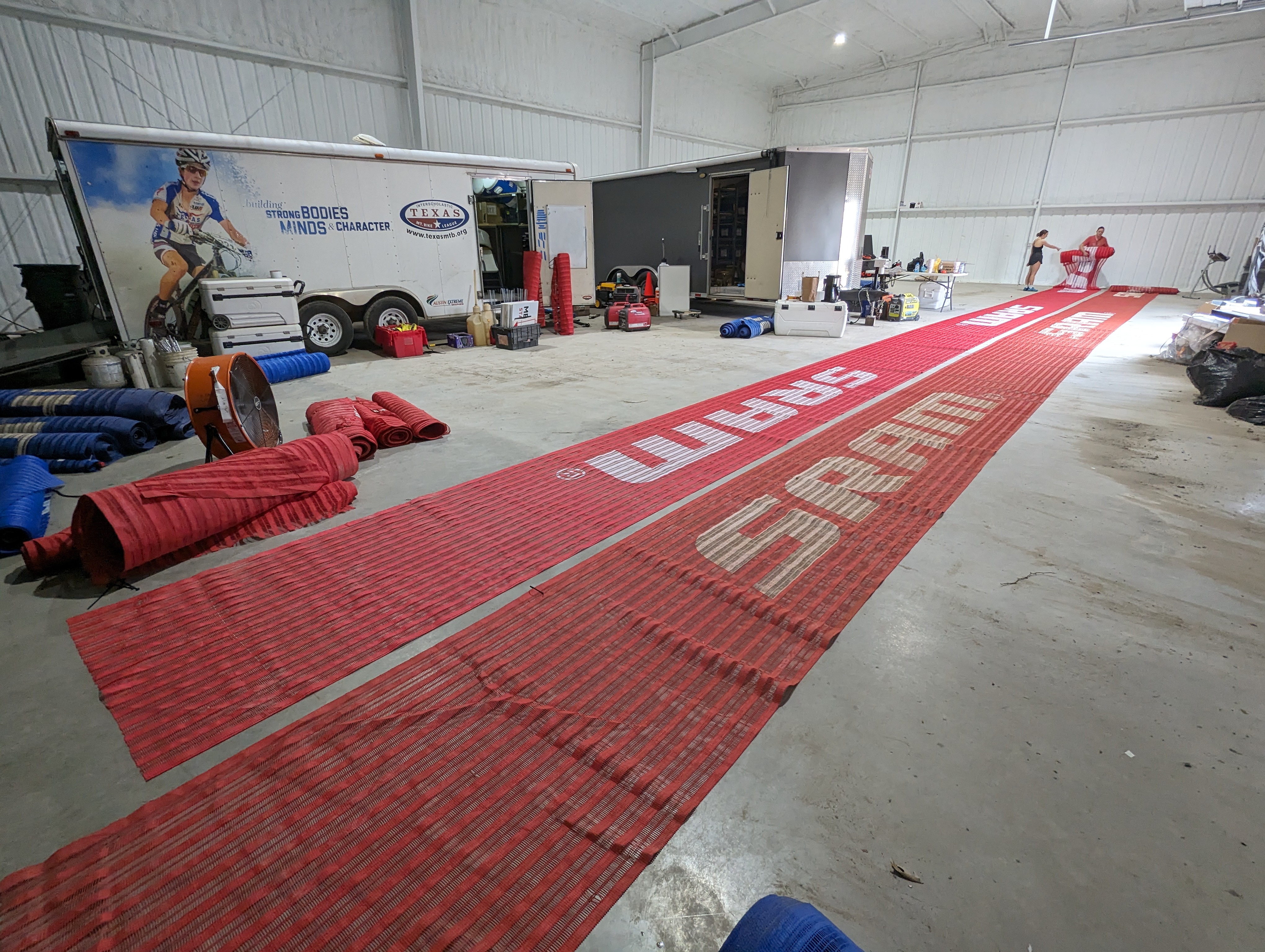
As participation expanded across Texas, a single statewide race model was becoming harder to sustain without creating longer drives, larger events and a diminished participant experience. We divided the league into North and South conferences, duplicated major event infrastructure, built and equipped two operations trailers, expanded staff and volunteer leadership, and created repeatable systems that could support parallel race series across the state.
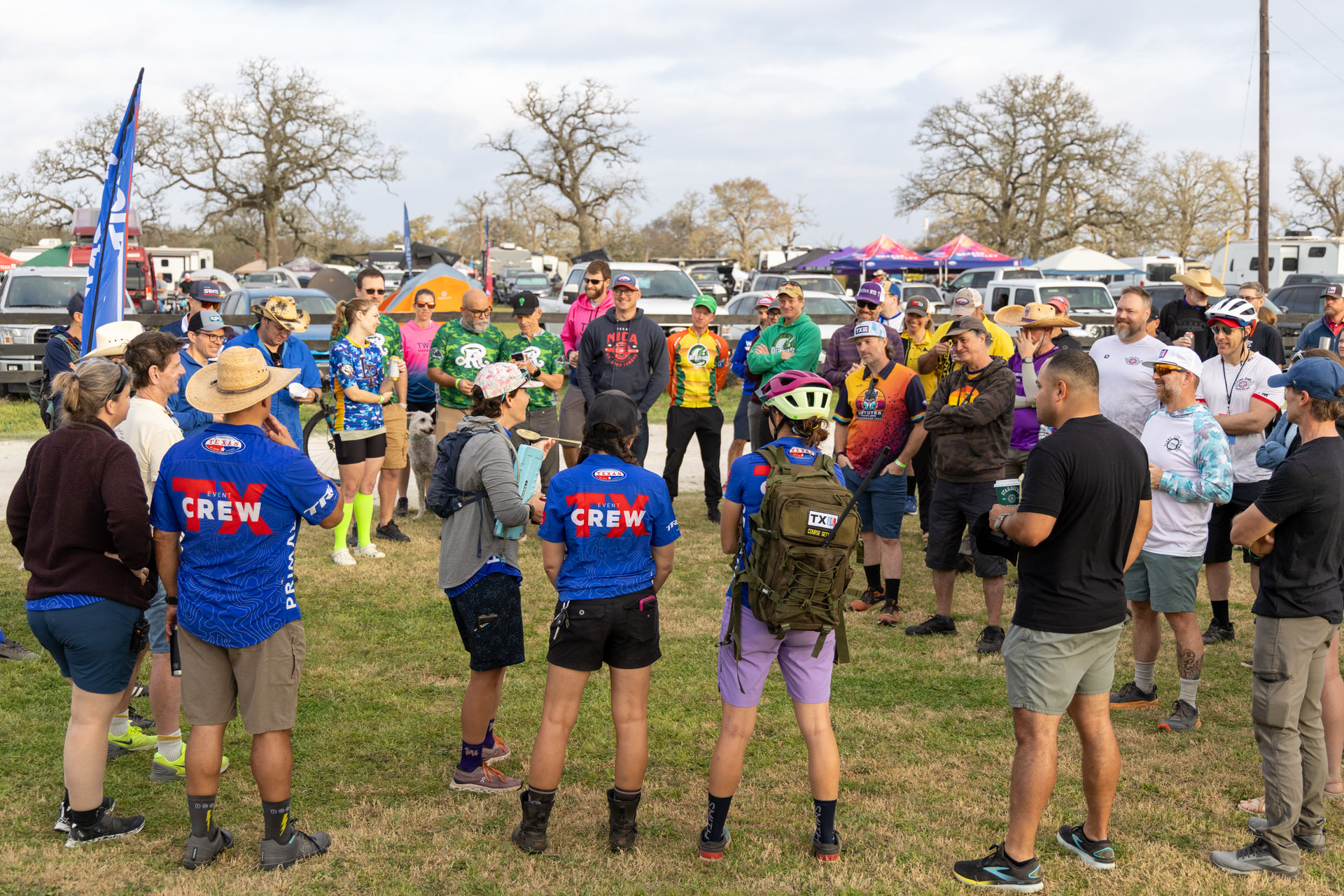
Each spring, we now produce nine major race weekends: four North Conference events, four South Conference events and a combined State Championship.
Reducing barriers to participation
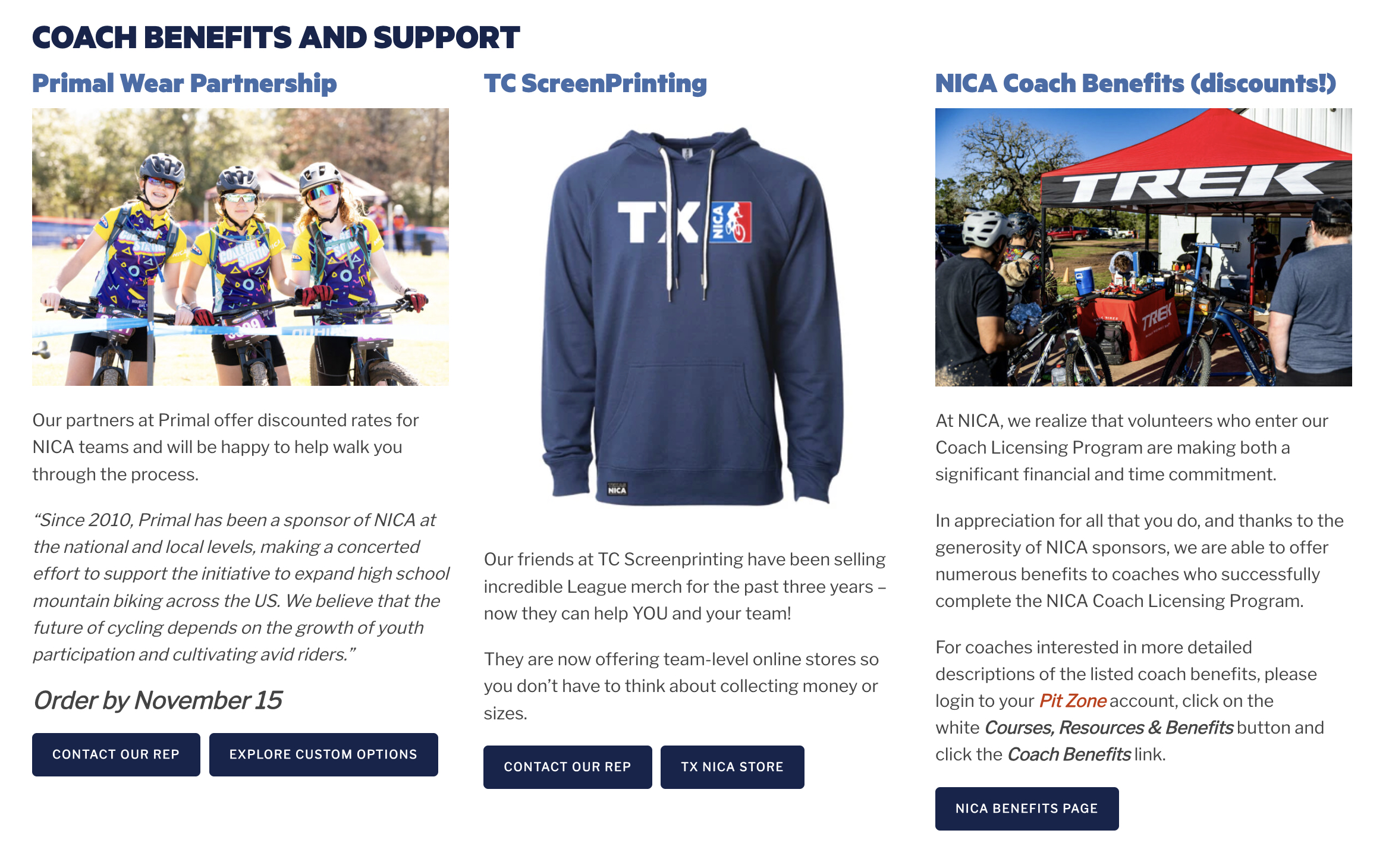
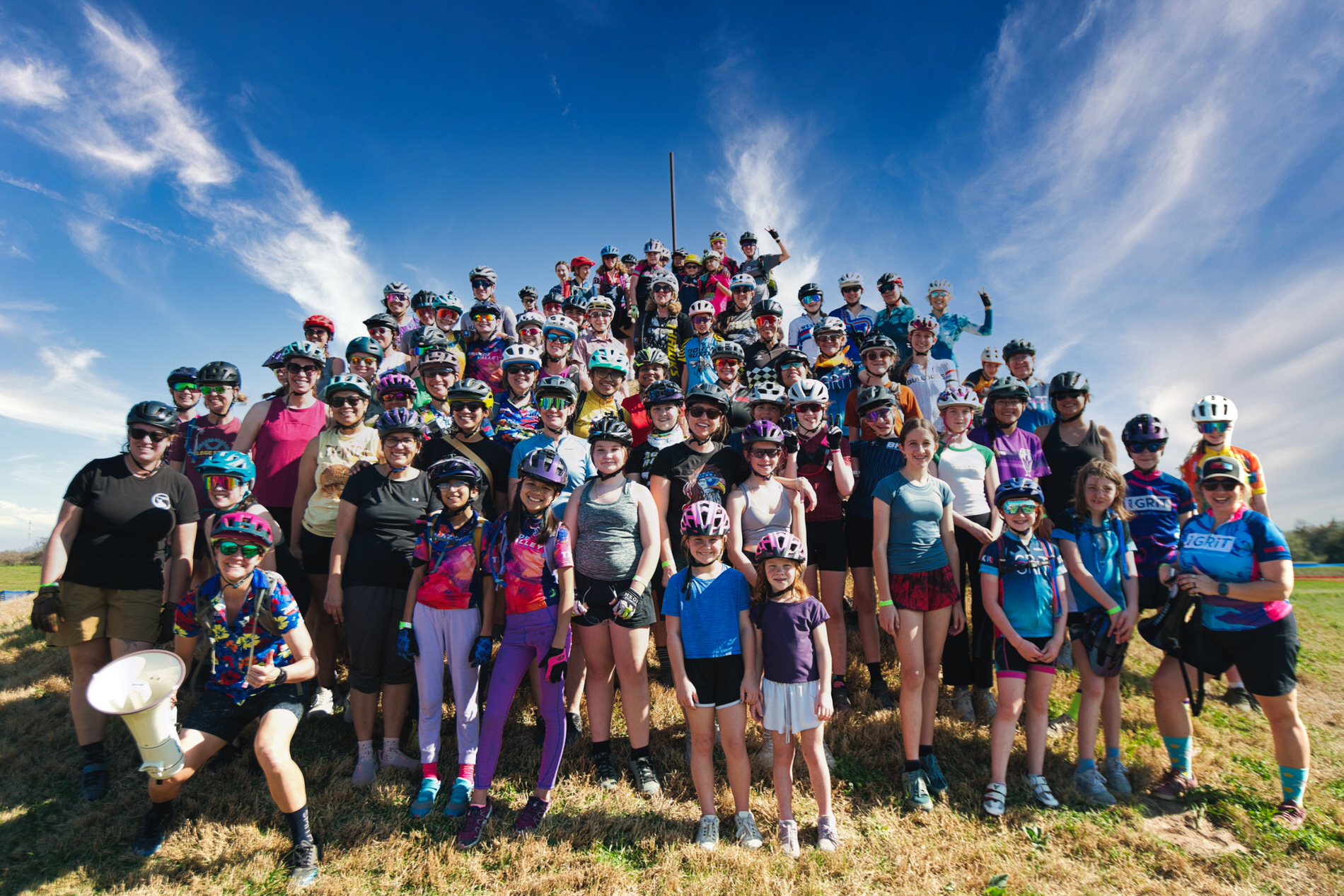
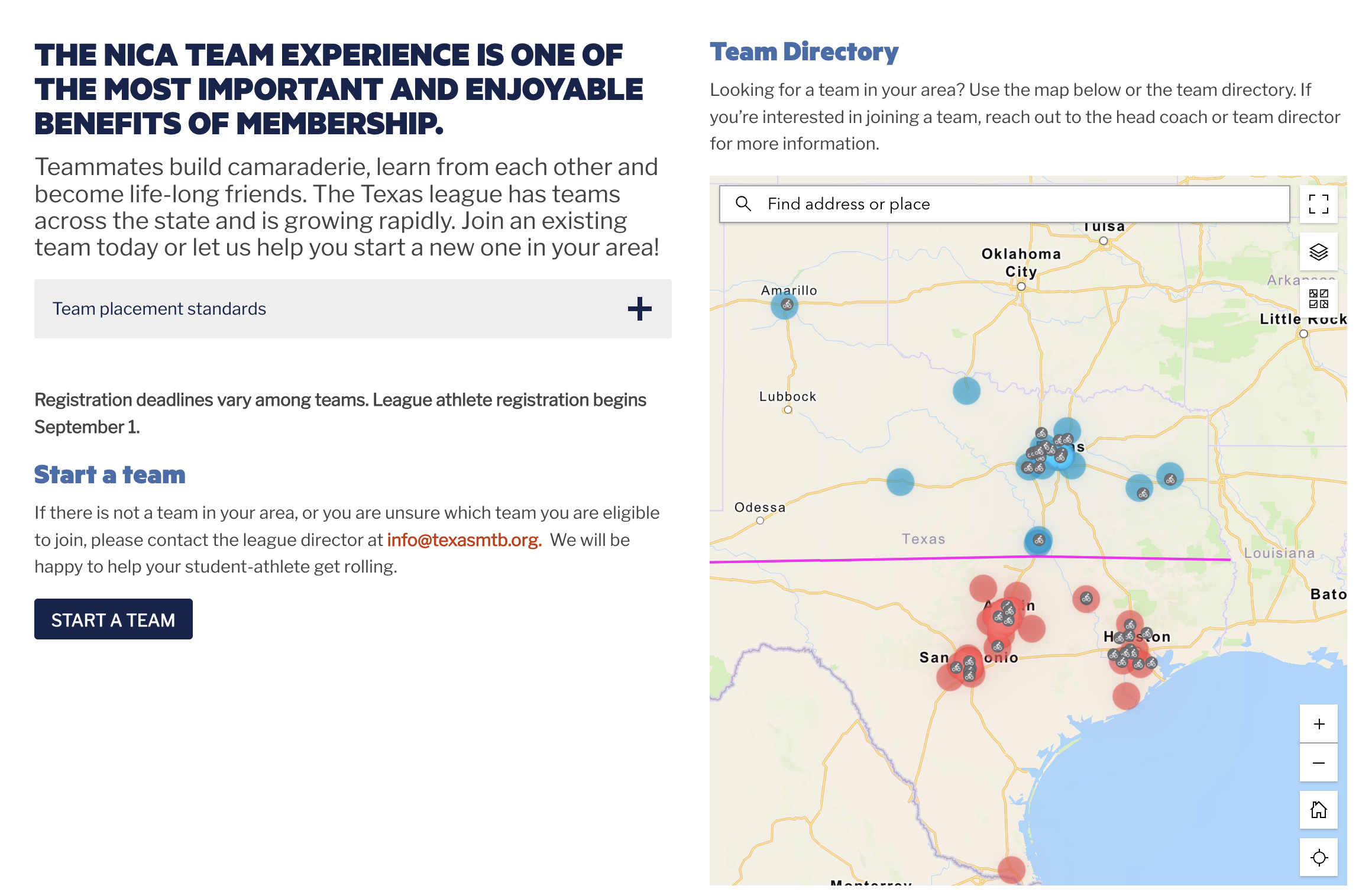
The conference model was designed to make participation easier for families by reducing travel and creating more geographically relevant race opportunities. At the same time, we moved from charging athletes per race to a single program fee that included race entry, removing another point of friction from the decision to attend.
We approached community growth the same way. Youth mountain biking does not grow simply because more people see an advertisement. A student needs a bike, a team, trained coaches, supportive parents, nearby trails and a community that makes participation feel possible.
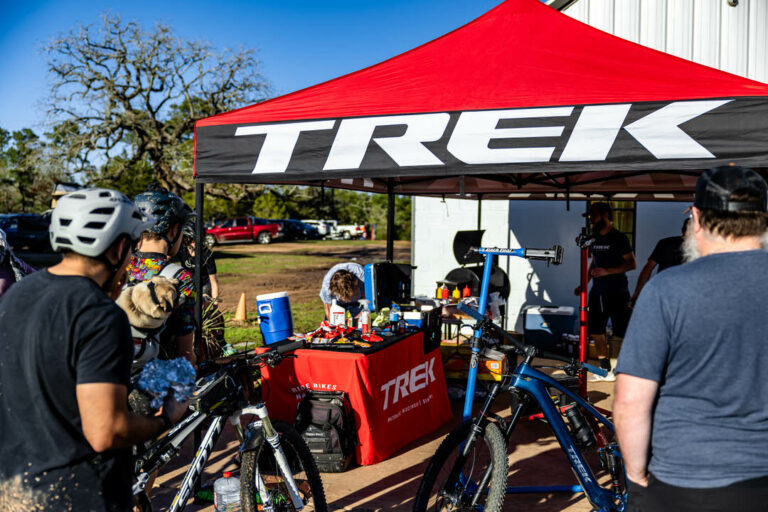
That means marketing, partnerships and program development have to work together. We use introductory riding programs, coach recruitment, team-development resources, targeted outreach, paid advertising, scholarships, social storytelling and race-day experiences to help families move from awareness to actual participation.
#1 athlete retention
Highest athlete retention among NICA leagues, 2025–2026
95% staff retention
38 of 40 staff returning for the 2027 season
Measuring what matters
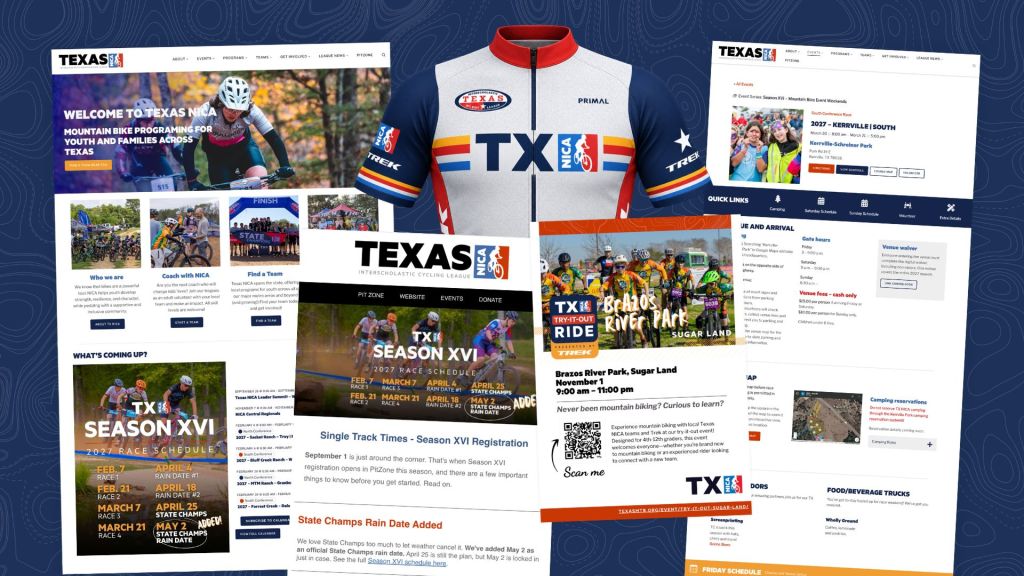
We track participation closely because registration alone does not tell us whether the model is working. Weather, venue changes and cancellations can create significant year-to-year noise, so we evaluate multiple measures over time.
Between 2023 and 2025, total athlete registration grew only about 2%, but the number of athletes who actually raced increased 18%, total race participation increased 42%, and the share of registered athletes who raced at least once grew from 76% to 90%.
We also track who is participating. Female athlete participation grew from 14.7% in 2021 to 23% in 2026, reflecting sustained investment in GRiT programming, ambassadors, outreach and community-building.
Today, the league is financially self-sufficient, supports two full-time leadership positions without relying on the original seed funding, and operates a statewide model designed not simply to register more athletes, but to make it easier for families to actually show up, participate and stay engaged.
76% → 90%
increase of registered athletes raced at least once from 2023 to 2025
+42%
total race participation from 2023 to 2025
14.7% → 23%
female athlete participation, 2021–2026
Building a Communication Platform Around the Organization
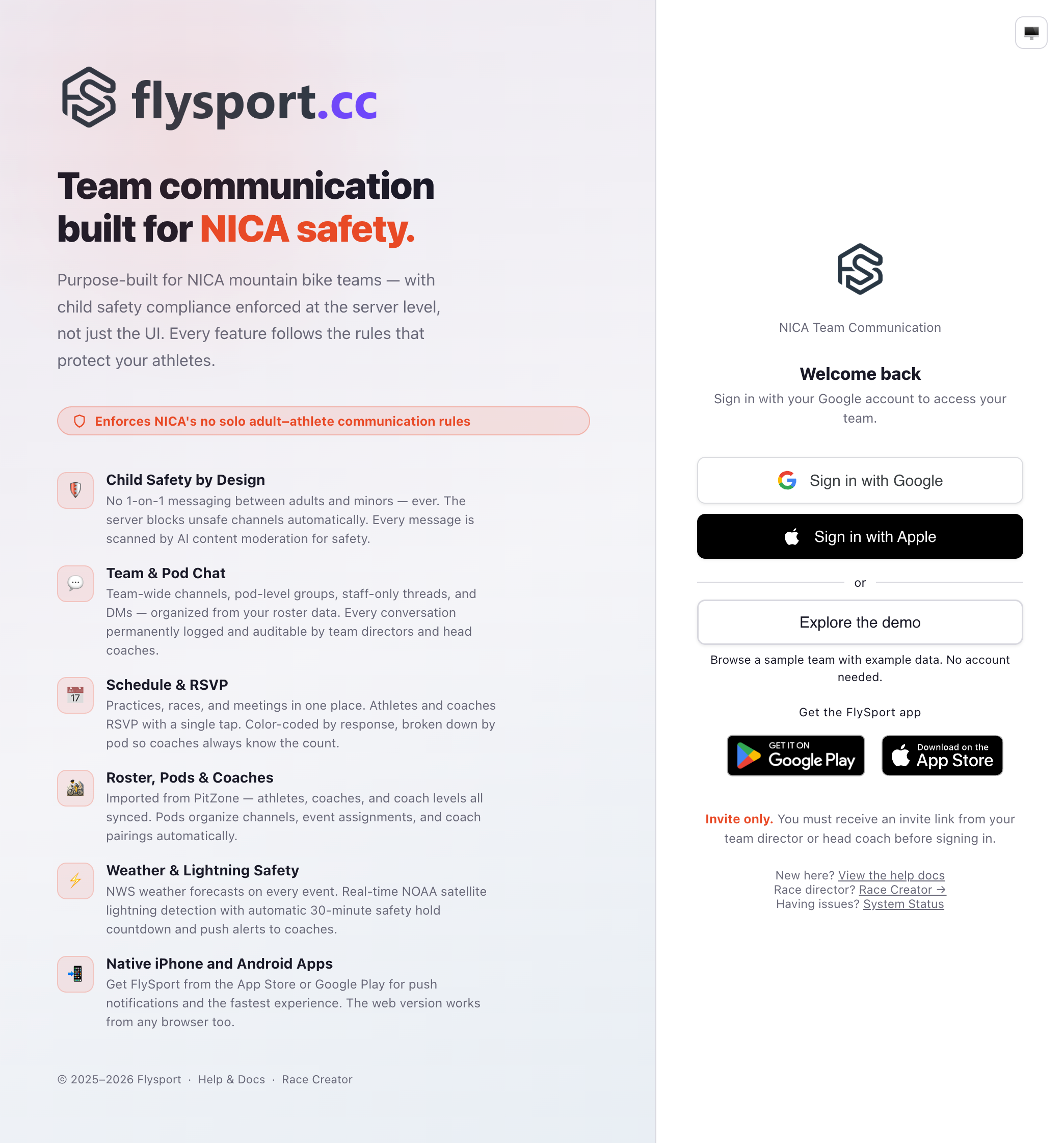
As the league grew, TeamSnap was no longer meeting the needs of a youth sports organization operating under NICA’s communication, safety and coaching requirements. We needed a system built around the way our teams actually work, not one we had to keep adapting around.
Working with one of our volunteer head coaches, I helped define and develop FlySport, a communication platform designed specifically for NICA teams.
We started with the practical problems coaches were already trying to solve: team and pod communication, practice scheduling, RSVPs, roster management, coach assignments, weather alerts and communication with minors. From there, we designed the platform around league policies and workflows rather than trying to force those workflows into a general-purpose team app.
Child safety became a core product requirement. FlySport is designed to prevent one-to-one communication between adults and minors, maintain auditable team conversations and structure communication around existing roster and coaching relationships.
The platform also brings scheduling, pod organization, coach information, weather monitoring and team communication into one system, reducing the number of tools coaches need to manage.
The result is more than a replacement for TeamSnap. It is a product built around the actual needs, policies and culture of the organization.
My role: Product strategy, requirements, workflow design, user needs, policy integration, testing and implementation.
Building an Integrated Communications Organization
Texas A&M AgriLife | Director of Marketing & Communications
When I joined AgriLife, the communications function was much narrower in scope, centered primarily around news, graphic design and web support.
As the organization’s needs grew, I helped expand both the team and the role communications played across AgriLife. Over time, the group grew from roughly 10 people to 40, adding dedicated expertise in photography, video, social media, marketing, executive communications and legislative communications while strengthening our existing news, design and web capabilities.
The goal was not simply to add headcount. It was to build a more complete communications organization that could support institutional priorities from multiple angles and connect those functions more intentionally.
That meant thinking about how newsroom content could feed web and social, how photography and video could strengthen storytelling across channels, how executive and legislative communications could support leadership priorities, and how marketing could help the organization move from reactive production toward more proactive, strategic work.
As the team expanded, I helped shape roles, priorities, workflows and expectations so that new capabilities became part of a more integrated system rather than a collection of separate specialties.
The result was a communications organization with significantly greater capacity, broader expertise and more strategic influence across Texas A&M AgriLife.
10 → 40
10 News + design + web team members → 40 integrated communications organization team members

